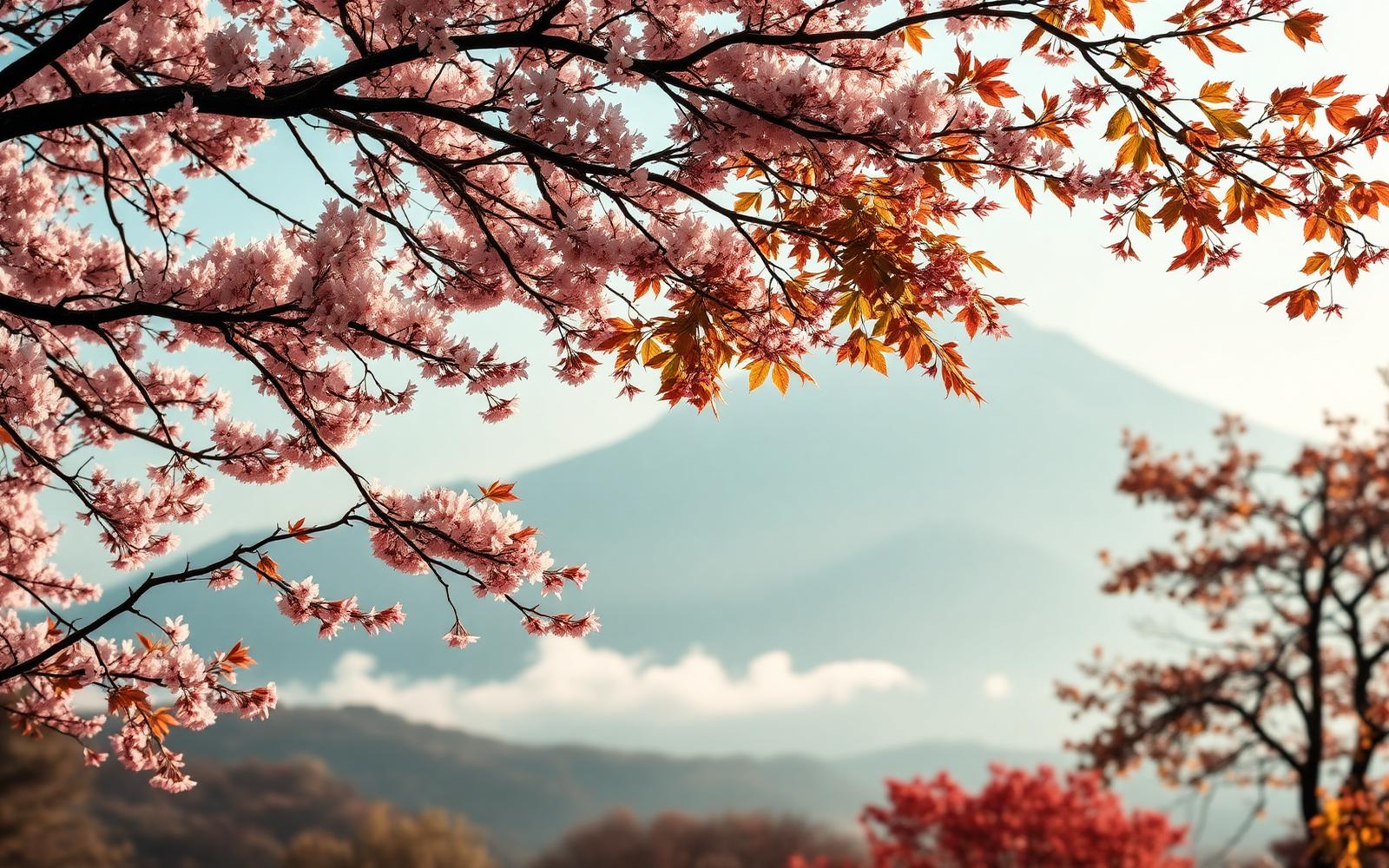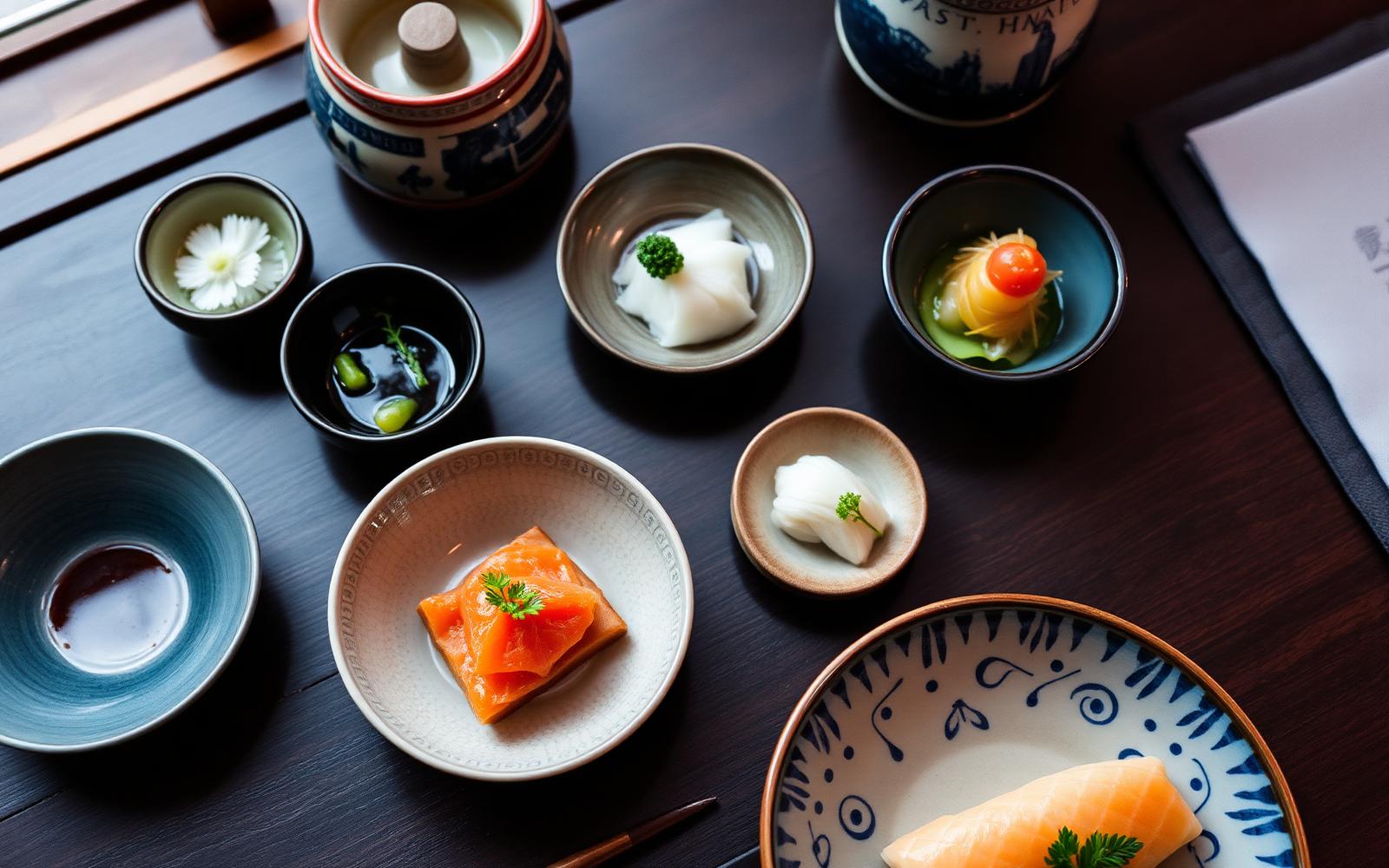
A kaiseki always begins in silence. You sit, you observe. Then comes the first dish — a single autumn leaf, a spring blossom, a sprig of pine in winter — announcing, before any flavour, the true subject of the meal: the season.
A grammar, not a menu.
Kaiseki follows a precise progression: sakizuke, hassun, mukōzuke, takiawase, yakimono… Each course has its role, its texture, its temperature. Nothing is merely decorative. A flower resting on a bowl signals the month. A cold dish follows a hot one to awaken the palate. A raw preparation precedes a simmered one to ready the body.
The chef's gesture.
In a true kaiseki house, the chef does not write the menu the night before — he writes it in the morning, returning from the market. What was caught at dawn, what was gathered overnight, what will no longer exist in a week's time. The meal becomes the diary of a single instant, impossible to repeat.
“Kaiseki is not told. It is passed through — like a season.”
We reserve, for our travellers, a handful of confidential tables in Kyoto, Kanazawa or mountain ryokans — houses where no French is spoken, where photographs are not taken, and where every course ends in a moment of silence. It is, to our mind, the finest gateway into Japanese culture.