Japan travels beautifully by train. It is a given — almost a reflex by now. But alongside the great Shinkansen lines lies another country, slower and more discreet, that only a car allows you to truly cross.
What driving changes.
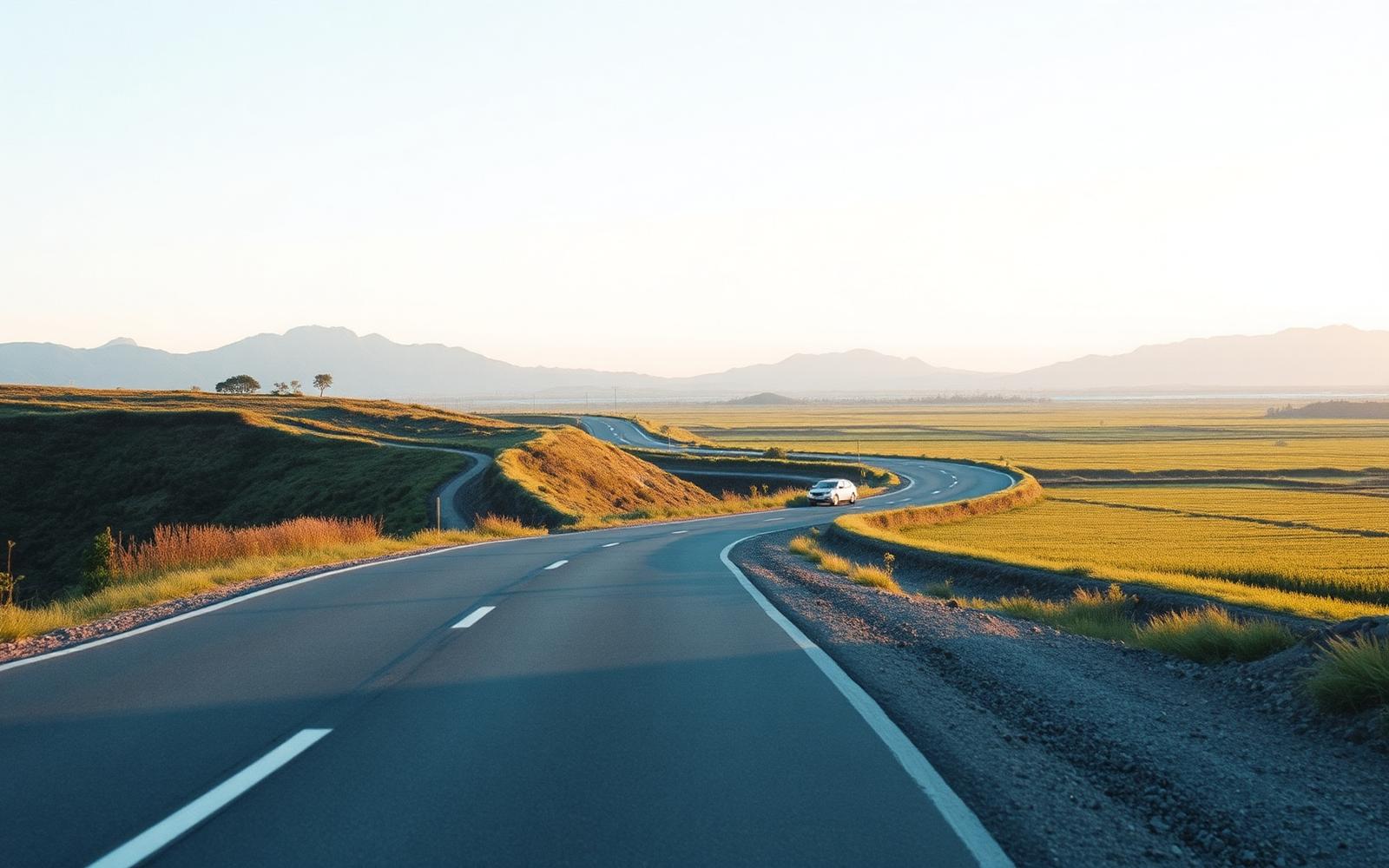
By train, you connect points. By car, you connect landscapes. The Noto Peninsula, the coastal roads of Shikoku, the Iya Valley, the terraced rice fields of Niigata, the high pastures of Nagano: regions that remain invisible to anyone confined to the rails. Out there, you meet more wild boar than tourists.
A country built for driving.
Japanese roads are immaculate, signage is translated into English, and drivers show disarming courtesy. The GPS speaks French. Petrol stations fill your tank for you, clean your windscreen, and bow as you drive off. It may be the most restful country in the world in which to take the wheel.
The art of the detour.
The true luxury of a Japanese road trip is the freedom to stop. A café tucked beside a river, a potter's workshop marked only by a simple noren curtain, a nameless temple at the end of a dirt track. These encounters appear in no itinerary. They happen because room was left for chance.
“The train shows you Japan. The car lets you meet it.”
We do not recommend a road trip for every region — Tokyo or Kyoto are best explored on foot. But wherever countryside, coastline, mountains or islands are involved, we happily slip a car into the itinerary. An annotated map, a handful of confidential addresses, and the rest writes itself.